


Navigating Safety Integrity Levels
In Nigeria’s high-risk oil & gas, petrochemical, and power generation sectors, functional safety isn’t optional—it’s a regulatory imperative and moral obligation. A single safety system failure can result in catastrophic incidents: loss of life, environmental devastation, facility destruction, and billions of Naira in liabilities.
At Limeswood International, we’ve spent over a decade designing, integrating, and validating Safety Instrumented Systems (SIS) that meet rigorous Safety Integrity Level (SIL) requirements across Shell SPDC facilities, Aradel Holdings flowstations, Platform Petroleum metering installations, and XENERGI’s Kwale Gas Gathering Facility. Our zero Lost Time Injuries (LTI) record over 10 years is built on this uncompromising commitment to functional safety.
What Are Safety Integrity Levels (SIL)?
Safety Integrity Level (SIL) is a quantitative measure of safety system performance, defined by international standards IEC 61508 (functional safety of electrical/electronic/programmable electronic safety-related systems) and IEC 61511 (functional safety for process industry sectors).
SIL ratings range from SIL 1 (lowest) to SIL 4 (highest), with each level representing a target Probability of Failure on Demand (PFD):
| SIL Level | PFD Range | Risk Reduction Factor | Typical Application |
|---|---|---|---|
| SIL 1 | 10⁻² to 10⁻¹ | 10 – 100 | Basic process alarms, non-critical shutdowns |
| SIL 2 | 10⁻³ to 10⁻² | 100 – 1,000 | Emergency shutdown (ESD) for moderate-hazard processes |
| SIL 3 | 10⁴ to 10⁻³ | 1,000 – 10,000 | High-integrity pressure protection (HIPPS), critical ESD systems |
| SIL 4 | 10⁻⁵ to 10⁻⁴ | 10,000 – 100,000 | Nuclear, aerospace (rarely used in oil & gas) |
For Nigeria’s oil & gas sector, SIL 2 and SIL 3 are most common, particularly for:
- Emergency Shutdown (ESD) systems
- Fire & Gas (F&G) detection networks
- High-Integrity Pressure Protection Systems (HIPPS)
- Burner Management Systems (BMS)
- Critical wellhead automation
Why SIL Compliance Matters for Nigerian Operators
1. Regulatory Mandate
The Department of Petroleum Resources (DPR) and Nigerian Upstream Petroleum Regulatory Commission (NUPRC) require functional safety compliance for all new facilities and major modifications. Non-compliance can result in:
- Permit revocation
- Operational shutdown orders
- Heavy fines and penalties
- Criminal liability for senior management
2. Insurance & Liability
Insurers increasingly demand proof of SIL-rated safety systems before underwriting facilities in the Niger Delta and offshore assets. A documented Safety Requirements Specification (SRS) and SIL Verification Report can reduce premiums by 20-40% while demonstrating due diligence in incident investigations.
3. Asset Protection
A single unplanned shutdown due to safety system failure can cost ₦50-500 million per day in lost production for a medium-sized flowstation. SIL-rated systems prevent both false trips (unnecessary shutdowns) and dangerous failures (failure to shut down when required), protecting both revenue and infrastructure.
4. Local Content & Technology Transfer
Nigeria’s Oil & Gas Industry Content Development (NOGICD) Act mandates that safety-critical systems be designed, installed, and maintained by competent personnel. Limeswood’s 30+ certified technical personnel and 90%+ indigenous workforce ensure you meet local content requirements without compromising global safety standards.
The SIL Lifecycle: From Assessment to Validation
Achieving SIL compliance isn’t a one-time event—it’s a rigorous, documented lifecycle process. At Limeswood, we guide clients through every phase:
Phase 1: Process Hazard Analysis (PHA) & HAZOP
We conduct systematic Hazard and Operability Studies (HAZOP) to identify potential deviations from normal operation, their causes, consequences, and existing safeguards. This forms the foundation for determining which Safety Instrumented Functions (SIFs) require SIL rating.
Limeswood’s Approach:
- Multi-disciplinary workshops with operations, engineering, and HSE teams
- Use of industry-standard PHA software (PHA-Pro, PHAWorks)
- Documentation aligned with ISO 45001:2018 and client-specific QA/QC protocols
Phase 2: SIL Determination (SIL Classification)
Not every safety function needs SIL 3. We use Layer of Protection Analysis (LOPA) or Risk Graph methodologies to assign appropriate SIL levels based on:
- Severity of potential consequence (personnel injury, environmental damage, asset loss)
- Frequency of the initiating event
- Probability of existing independent protection layers (IPLs) failing
Example: A gas pipeline overpressure scenario might require:
- Basic Process Control System (BPCS) – not a safety layer
- Pressure Relief Valve (PRV) – IPL 1
- High-Pressure Shutdown (SIF) – requires SIL 2 verification
Phase 3: Safety Requirements Specification (SRS)
The SRS is the “bible” for your safety system. It documents:
- Each Safety Instrumented Function (SIF) with unique tag number
- Required SIL level and target PFD
- Sensor, logic solver, and final element specifications
- Voting architectures (e.g., 1oo2, 2oo3)
- Proof test intervals and procedures
- Response time requirements
- Environmental and cybersecurity constraints
Limeswood’s SRS Advantage: We don’t use generic templates. Every SRS is customized to your facility’s specific hazards, operating conditions, and OEM equipment (Schneider Electric, Honeywell, Siemens, etc.).
Phase 4: SIL Verification (PFD Calculation)
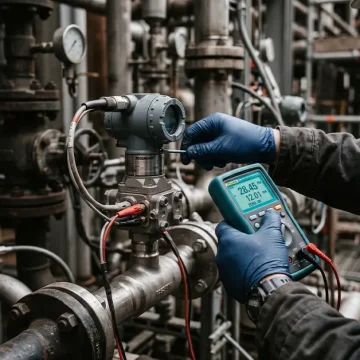
Before installation, we mathematically verify that your proposed safety system architecture can achieve the required SIL. Using industry-standard tools like exSILentia or SILCalculator, we calculate:
- PFDavg (average Probability of Failure on Demand)
- MTTF (Mean Time To Failure) for each component
- Diagnostic coverage from automatic self-tests
- Common Cause Failure (CCF) factors using β-factor model
- Proof test effectiveness and intervals
Real-World Example: For a SIL 2 SIF requiring PFD < 0.01:
- Pressure transmitter (1oo2 voting): PFD = 0.0012
- Honeywell Safety Manager logic solver: PFD = 0.0008
- Solenoid valve (1oo1): PFD = 0.0035
- Total PFDavg = 0.0055 ✅ Meets SIL 2 requirement
Phase 5: Design, Installation & Commissioning
This is where theory meets reality. Our certified engineers ensure:
- Separation of safety and control systems (no shared I/O, power, or networks)
- Proper cable segregation (safety circuits in dedicated trays/conduits)
- Redundant power supplies with battery backup (minimum 24-72 hours autonomy)
- Zone-certified equipment for hazardous areas (ATEX, IECEx for Zone 1/Zone 2)
- Factory Acceptance Test (FAT) with witness testing of all safety logic
- Site Acceptance Test (SAT) including end-to-end loop checks and trip testing
Limeswood’s Track Record: We’ve successfully commissioned SIL-rated systems for:
- Shell SPDC: Gas Chromatograph & Gas Density Skid with integrated safety shutdowns
- XENERGI Kwale Gas Gathering: SCADA and PLC integration with Fire & Gas detection
- Platform Petroleum: Custody Transfer Metering with overpressure protection (HIPPS)
Phase 6: Operation, Maintenance & Proof Testing
A SIL-rated system is only as good as its maintenance. We provide:
- Resident O&M engineers for 24/7 monitoring and rapid response
- Scheduled proof testing per SRS requirements (typically every 6-24 months)
- Bypass management procedures to maintain safety during maintenance
- Management of Change (MOC) for any modifications to safety systems
- Incident investigation and root cause analysis for safety system activations
Critical Insight: Many operators achieve SIL certification during commissioning but degrade to non-compliance within 2-3 years due to poor maintenance, undocumented bypasses, or component substitutions. Limeswood’s 98% client retention rate is built on long-term partnerships that keep your safety systems compliant throughout their lifecycle.
Common SIL Implementation Challenges in Nigeria (and How We Solve Them)
Challenge 1: Obsolete Equipment & Spare Parts
Many Nigerian facilities operate safety systems with components that are 10-20 years old, with OEMs no longer supporting them.
Limeswood Solution:
- Conduct obsolescence assessments and develop migration plans
- Source OEM-certified replacements through our partnerships with Schneider Electric, Honeywell, and Siemens
- Perform retrofit engineering to minimize downtime during upgrades
- Maintain strategic spare parts inventory locally to avoid 12-16 week import delays
Challenge 2: Skills Gap & Knowledge Transfer
Functional safety requires specialized expertise that’s in short supply locally.
Limeswood Solution:
- Deploy TÜV-certified Functional Safety Engineers (or engineers currently pursuing certification)
- Provide on-the-job training for client personnel during every project phase
- Develop customized training programs on SIS operation, proof testing, and troubleshooting
- Document everything in clear, accessible procedures (not just theoretical manuals)
Challenge 3: Multi-Vendor System Integration
Most facilities have safety systems from different OEMs (e.g., Honeywell F&G, Schneider ESD, Siemens fire detection) that don’t communicate seamlessly.
Limeswood Solution:
-
Leverage our vendor-neutral approach
to integrate disparate systems via:
- Modbus TCP/IP or Profibus gateways
- Hardwired interlocks for critical safety signals
- OPC UA for secure data exchange with SCADA/DCS
- Ensure cybersecurity compliance (IEC 62443) for networked safety systems
Challenge 4: Regulatory Audits & Documentation
DPR/NUPRC inspectors increasingly demand comprehensive safety documentation during audits.
Limeswood Solution:
- Maintain digital document management systems with version control
-
Provide audit-ready packages including:
- Updated SRS for all SIFs
- SIL Verification Reports with PFD calculations
- Proof test records and certificates
- Training logs and competency matrices
- MOC documentation for all modifications
- Conduct mock audits to identify gaps before regulators arrive
SIL vs. Non-SIL Safety Systems: What’s the Difference?
Not all safety systems require SIL rating. Here’s how to distinguish:
| Feature | SIL-Rated Safety System | Non-SIL Safety System |
|---|---|---|
| Application | Critical ESD, HIPPS, F&G for high-hazard processes | Basic alarms, non-critical shutdowns, fire extinguishers |
| Design Standard | IEC 61508/61511 compliant | General industrial standards (e.g., NFPA, API) |
| Quantitative Proof | PFD calculation required, third-party verification | Qualitative risk assessment sufficient |
| Components | SIL-certified sensors, logic solvers, final elements | Standard industrial-grade equipment |
| Diagnostics | Automatic self-testing with >90% diagnostic coverage | Manual inspection and testing |
| Documentation | Extensive SRS, FAT/SAT protocols, proof test records | Basic datasheets and installation manuals |
| Cost | 2-5x higher upfront cost | Lower initial investment |
| Lifecycle | 15-25 years with rigorous maintenance | 5-10 years with basic upkeep |
Rule of Thumb: If a safety system failure could result in multiple fatalities, major environmental release, or total facility loss, it requires SIL rating. When in doubt, conduct a HAZOP and let the risk assessment guide you.
Emerging Trends in Functional Safety
1. Cybersecurity for Safety Systems (IEC 62443)
As safety systems become more networked, they’re vulnerable to cyberattacks. Limeswood implements:
- Network segmentation (safety systems on separate VLANs)
- Unidirectional gateways (data diodes) to prevent remote access
- Regular vulnerability assessments and penetration testing
- Security patches managed through controlled MOC processes
2. Wireless Safety Instruments
Traditional wired safety systems are expensive to install in brownfield facilities. New wirelessHART and ISA100.11a protocols now support SIL 2 applications, reducing installation costs by 40-60%. We’re piloting wireless pressure transmitters and gas detectors for remote wellhead monitoring.
3. Predictive Safety Analytics
Instead of waiting for proof tests to reveal failures, AI-driven analytics can predict component degradation. Limeswood integrates:
- Vibration monitoring on solenoid valves and actuators
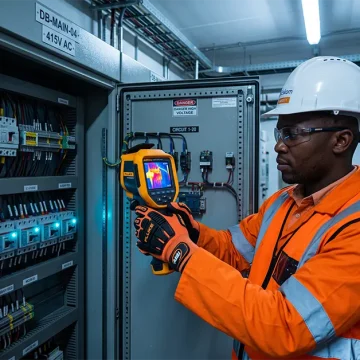
- Thermal imaging of logic solver cabinets
- Trend analysis of sensor drift and calibration data
- Machine learning algorithms to flag anomalies before they cause dangerous failures
4. Functional Safety for Renewable Energy
As Nigeria expands solar and gas-to-power projects, functional safety principles apply to:
- Battery Energy Storage Systems (BESS) – thermal runaway prevention
- Solar inverter protection – arc fault detection
- Hybrid power systems – synchronization safety
Limeswood’s experience with 4.25 MW power plant installations and solar backup solutions positions us to deliver SIL-compliant safety for Nigeria’s energy transition.
Partner with Limeswood for SIL Excellence
Navigating Safety Integrity Levels requires more than theoretical knowledge—it demands hands-on experience with Nigeria’s unique operational challenges, regulatory landscape, and infrastructure constraints.
With 10+ years of industry experience, 100+ successful EPIC projects, and a 98% client retention rate, Limeswood International is your trusted partner for:
✅ SIL Assessment & Classification – HAZOP, LOPA, SIL determination
✅ Safety System Design & Integration – PLC, DCS, SCADA, SIS, F&G
✅ SIL Verification & Validation – PFD calculations, FAT/SAT, proof testing
✅ Resident O&M Support – 24/7 monitoring, maintenance, troubleshooting
✅ Training & Competency Development – functional safety certification programs
✅ Regulatory Compliance – DPR/NUPRC audit preparation and documentation
Our Commitment
We don’t just install safety systems—we build safety cultures. Every project includes knowledge transfer, documentation, and long-term support to ensure your team can operate and maintain SIL-compliant systems with confidence.
Ready to elevate your functional safety compliance?
📞 Call us: +234 91 722 2360
📧 Email: info@limeswood.com.ng
📍 Visit: Plot 12, Churchgate Street, Victoria Island, Lagos State, Nigeria
Let’s ensure your operations are not just compliant, but Beyond Limit in safety excellence.